
Dolby Laboratories, Inc.
Relationships
Dolby's brand wasn't broken. Its relationships were.
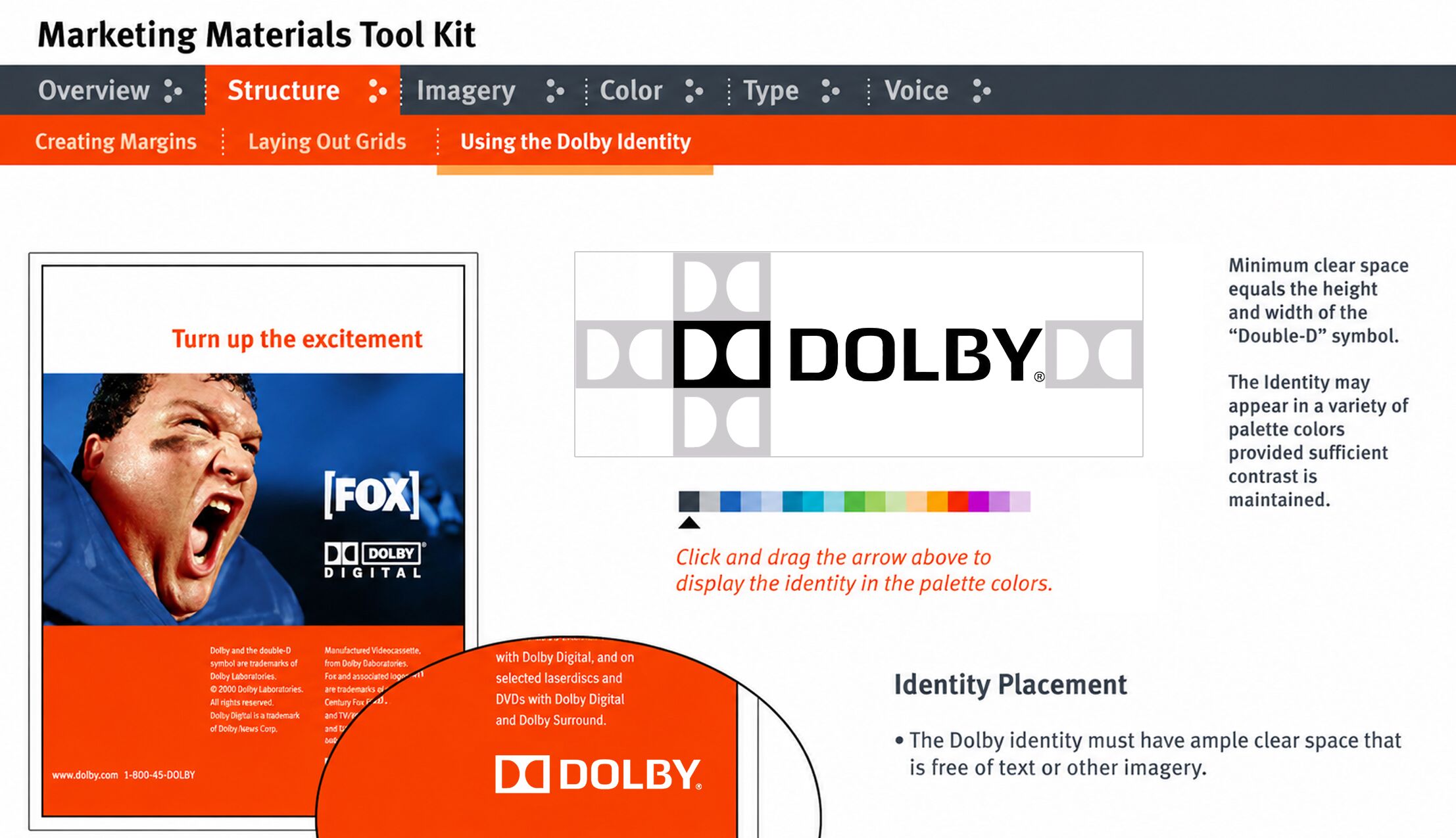
Internal teams and third-party vendors shared the same brand, but not the same understanding of it. Strategy, identity, and execution had begun to diverge across print, web, and interactive products.
My role was to rebuild those relationships by creating a brand system that made Dolby's identity clear, consistent, and absorbable for every brand steward.

Relationships strengthened
- Brand ↔ Strategy (Identity — Unified consistency)
- Brand ↔ Aesthetics (Expression — Consistent integrity)
- Strategy ↔ Engineering (Systems — Scalable solutions)
Identity
The primary challenge wasn't visual consistency — it was a weak Brand ↔ Strategy relationship.
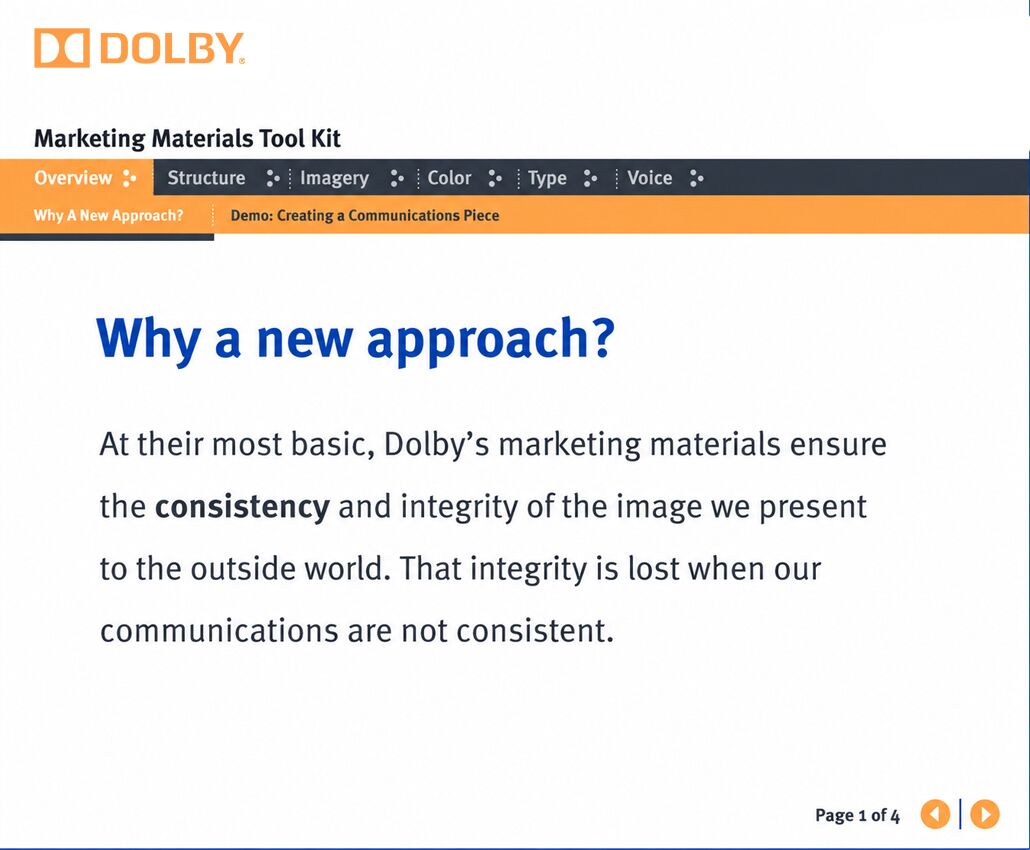
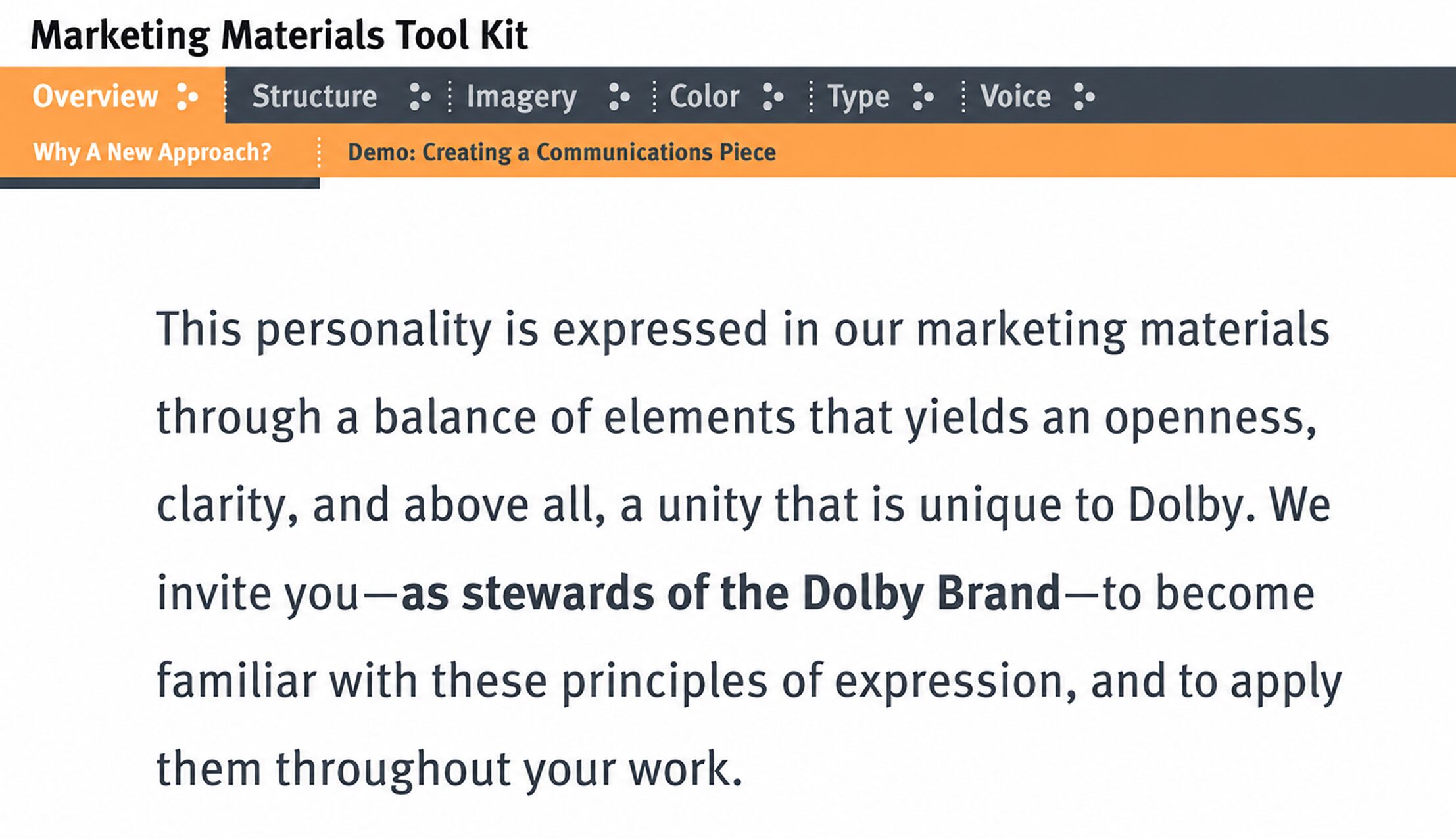
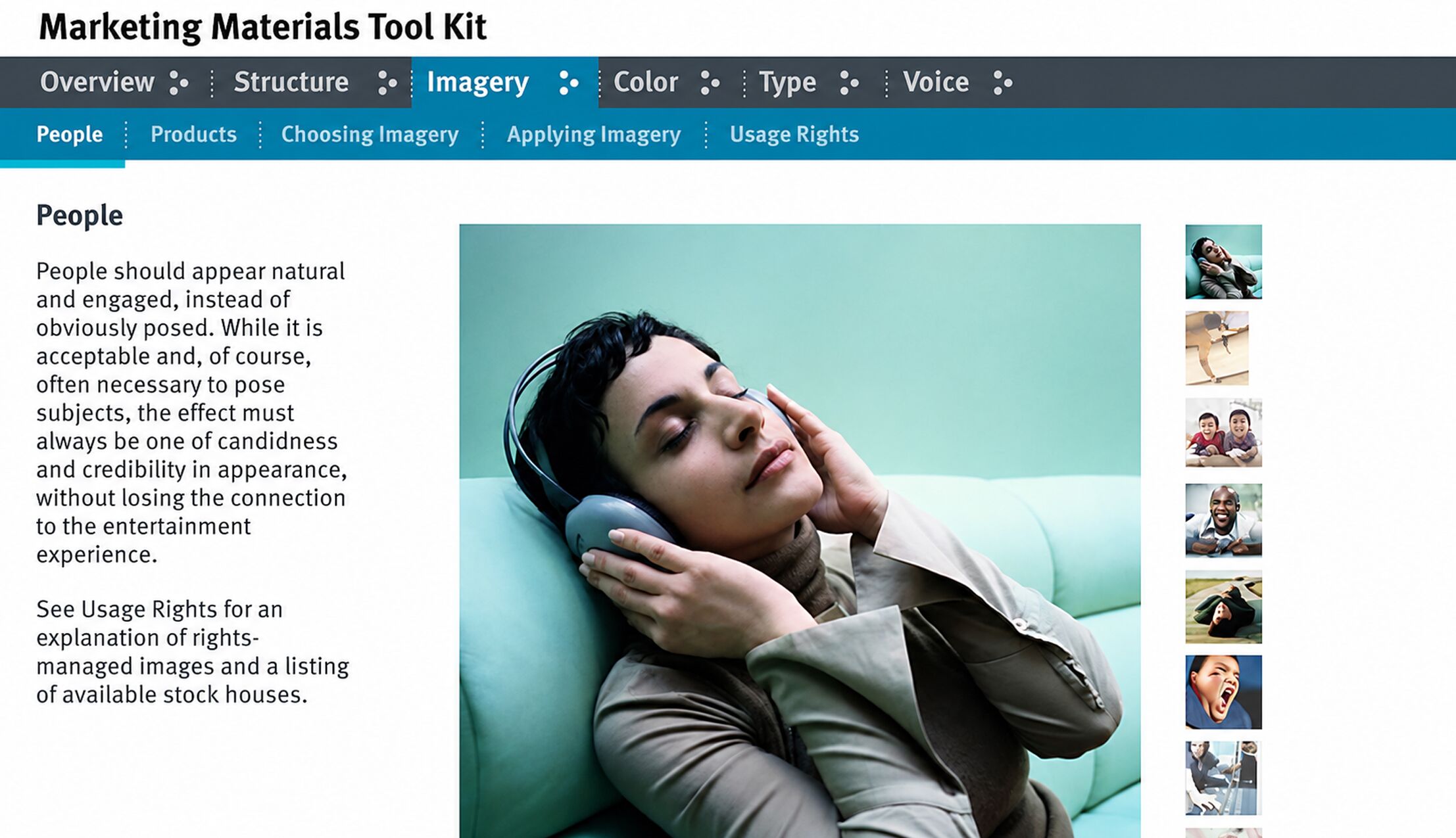
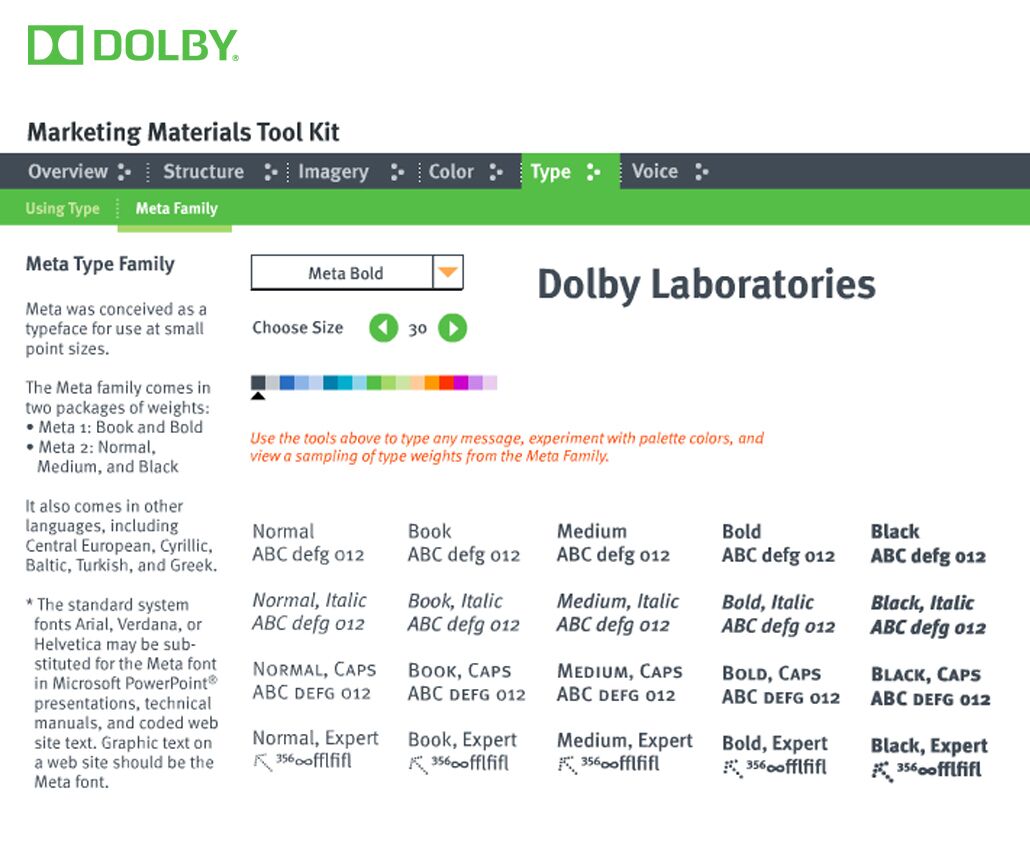
The toolkit translated Dolby's brand strategy into clear, practical guidance. By defining personality, principles, and application, it gave every team and vendor a shared understanding of what the brand meant.
Outcome: When a vendor asked "is this on-brand?", the toolkit answered — not a review cycle.
Expression
One mark, from a cinema screen to a phone icon.
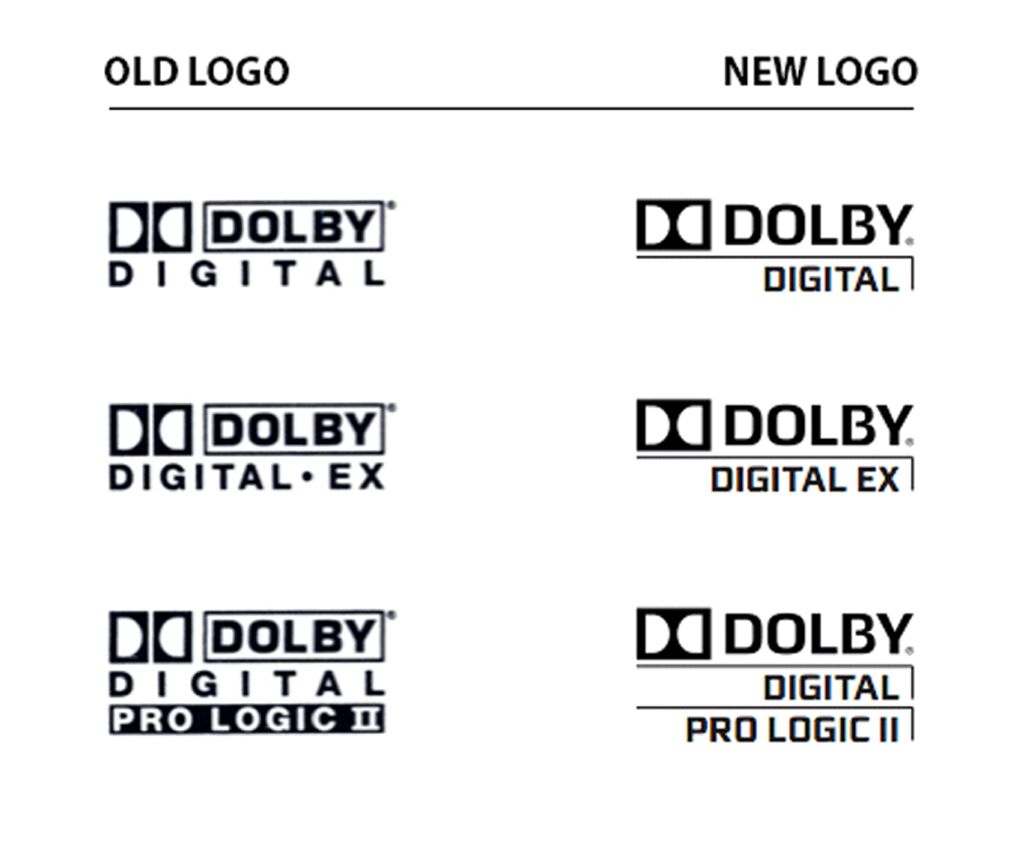
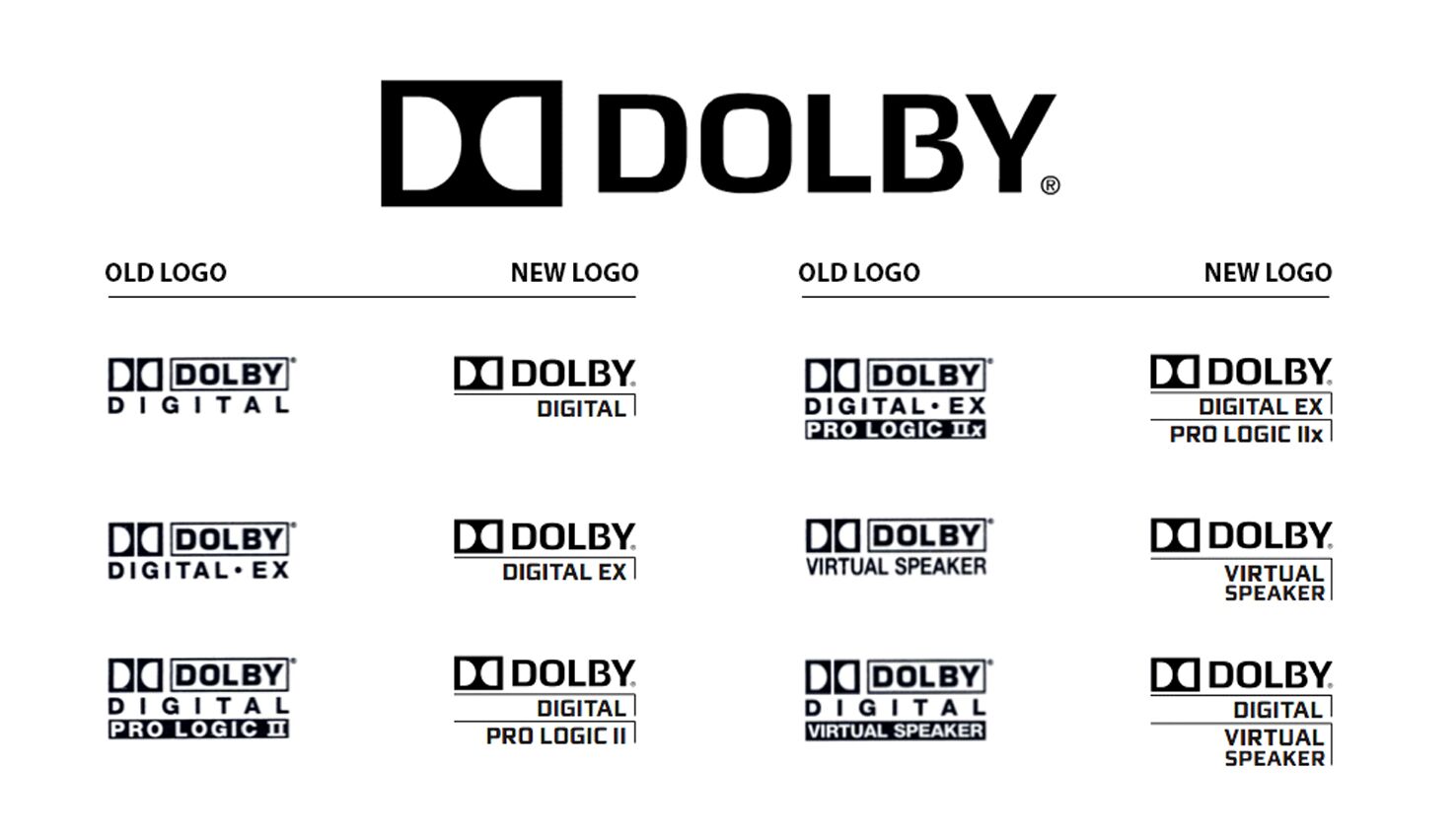
The Dolby logo shows up at every scale — billboards, posters, and theater screens at one end; streaming menus and device panels at the other. The old product lockups were built for the large end: fine rules, letterspaced type, and stacked bars that filled in or dropped out as they scaled down.
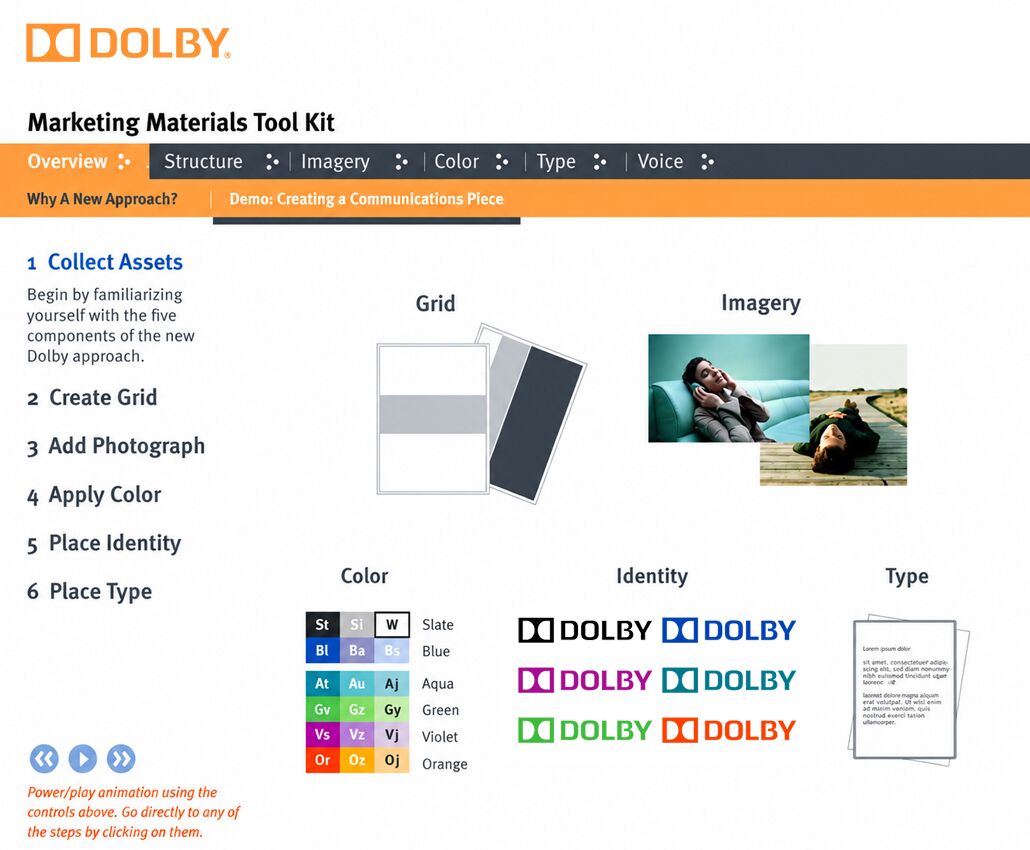
I rebuilt the family around what survives the whole range: heavier rules, tighter type, and a stronger positive/negative relationship in the double-D so the mark holds its shape at any size. Six product lockups, one grid.
Outcome: A logo family that reads the same at forty feet and forty pixels.
Systems
Consistency isn't enforced — it is designed.
The toolkit's information architecture made complex standards easy to find, understand, and apply. By reducing interpretation, it enabled teams and vendors to produce consistent work without constant oversight.
Outcome: Brand reviews shifted from correction to confirmation. Fewer rounds, faster approvals, and standards that held up without anyone policing them.
In Closing
Dolby didn't just make products — it licensed its brand to manufacturers worldwide. Every company that put the Dolby name on a device relied on this toolkit to use the brand correctly.
One system, governing the identity of a global brand across thousands of products and manufacturers — and it held for fourteen years after I left.